19 Jun 13

In The News…

by Catalogue for Philanthropy

Arts Nonprofit Launches Crowdfunding Website For Local Projects (Bethesda Now) – The Arts and Humanities Council of Montgomery County (AHCMC) launched a Kickstarter-like crowdfunding platform last Wednesday in a campaign to gain more donors who will actively be able to see the difference that they are making. The site, called power2give.org, features 21 community-based programs that are seeking up to $7,000 in funding. “This is an opportunity for us to find people who really can’t give that much,” said Erin Gifford, an Imagination Stage marketing associate. “This is a very big thing on social media and we find there’s a lot of younger people on social media who probably don’t have as much accessible income to give us.” With this effort, every dollars counts, and like Kickstarter, donors can enjoy certain prizes and benefits based on the amount of their gift.

The Overhead Myth (The Nonprofit Quarterly) – A recently published letter by Art Taylor of BBB Wise Giving Alliance, Jacob Harold of GuideStar, and Ken Berger of Charity Navigator is drawing a lot of attention in the philanthropic community. Entitled “The Overhead Myth,” the letter urges donors to not just analyze a nonprofit’s “overhead”- or charity expenses that go to administrative and fundraising costs- when deciding where to donate. The letter argues that while for some organizations, this ratio of donations to administrative costs can be used as reasoning to not donate (the recent Susan G. Komen scandal comes to mind), for most charities, these overhead costs are crucial to nonprofit improvement, advancement, and sustainability. The Nonprofit Quarterly, one of the many philanthropic journals featuring the letter, said in an editor’s note, “The NPQ is proud to highlight this important letter from GuideStar, Charity Navigator and the Wise Giving Alliance calling for an end to the obsession many have had with nonprofit overhead costs as a proxy for measuring effectiveness BUT for the letter to be effective it is important that people share it in every way they can.”

Fannie Mae’s Rosie Allen-Herring tapped to lead United Way of the National Capital Area (Washington Business Journal) Rosie Allen-Herring, Fannie Mae veteran employee, has recently been selected to lead the UWNCA with the upcoming retirement of Bill Hanbury, current CEO. Ted Davies, incoming Chair of the United Way of the National Capital Area Board of Directors, said the Allen-Herring was “extremely passionate about the success of the organization, but in a confident, humble way.” This news comes the same week that Diana Leon Taylor, founder of SageGroup-DC Consulting, LLC and special adviser on Haitian affairs to the State Department and White House, was selected out a national search to become the new president and CEO of the Nonprofit Roundtable of Greater Washington. Both women bring with them business savvy and commitment to the local community. This could be the beginning of a new trend in the nonprofit sphere according to a report by the Nonprofit Center; while more than 70% of nonprofit employees are women, a majority of men still hold leadership positions.

12 Jun 13

In The News…

by Catalogue for Philanthropy

Frager’s Moves To Eastern Market As Rebuilding Begins After Fire (WAMU) Frager’s Hardware, a Capitol Hill neighborhood store recently hit with a devastating four-alarm fire, is set to reopen in a different location – an empty lot and former temporary Eastern Market location – this weekend. “Frager’s Hardware is one of the most beloved businesses in the District, and none of us can imagine the Capitol Hill community without Frager’s,” said Mayor Vince Gray in a recent statement. The new location will be selling plants and gardening supplies while rebuilding and repairing the beloved spot.

Montgomery County Announces Capital Bikeshare Expansion Plans (WAMU) Capital Bikeshare has over 1500 bikes at 175 stations across Virginia and the District, but none in Maryland. Under a new plan, the Montgomery County Department of Transportation has announced that it will expand Capital Bikeshare to various Maryland sites by this summer, including Bethesda, Friendship Heights, Rockville, Shady Grove, Silver Spring, and Takoma Park. This plan includes 500 new bikes at 55 different stations, focused along Metro lines to the north of DC. This plan is part of a pilot effort to see how the bikeshare program could positively affect low-income workers in suburban areas.

From a Nonprofit, Advice on Reaching Millennials (The New York Times) Do Something, a national nonprofit that seeks to match millennials with different campaigns and causes, has started a new division in researching consumer data. This division of the nonprofit, called TMI (just like the acronym, Too Much Information), tries to identify successful platforms to reach and interest Americans ages 13-25, from social media to website design; last year, Do Something had over 2.4 million participants, a number the organization is trying to even further increase this year. Using this information, the division will work with both nonprofit and for-profit organizations and marketing agencies to better reach young Americans with an interest in philanthropy and community service. The division has also stated that this division could one day segue into a for-profit venture, based on their future success.

05 Jun 13

In The News…

by Catalogue for Philanthropy

Fixing the IRS (The Chronicle of Philanthropy) In the wake of this month’s IRS tax-exemption scandals, The Chronicle of Philanthropy is posting a series on online article discussing different aspects of the controversy. Today’s article focuses on providing more money for enforcement; Monday’s considered the rules on political intervention: “The IRS should shift from the complex, multifactor, open-ended ‘facts and circumstances’ test currently used to interpret political activity to a well-defined, objective standard. The current test is hard for the agency to apply and was highly vulnerable to challenge long before the recent debacle.”

DC To Push Free Condom Program on TV (Washington Examiner) In a new initiative to popularize the District’s free condom distribution program, the DC government has created television ads to air on channels with a younger demographic – VH1, Bravo, ESPN, and others – to appeal to and reach more viewers. While the D.C. Department of Health has been pushing this initiative on public transport and newspapers for some time, this will mark the first time television has been used as an advertising channel. Through this public health program, the District has lowered its STD infection rate drastically, including its HIV infection rate by 24%. As the popularity and awareness of the program rises, the prevalence of STDs and unwanted pregnancies should continue to fall.

7 Proposals to Overhaul DC Public Schools (Washington Post) D.C. Council member David A. Catania (I-At Large) plans to propose 7 bills on Tuesday that would completely transform the District’s public education system. These bills include new allocation of funding to principals directly to design their own budgets, a new focus on accountability for school faculty and closer review by the superintendent, as well as innovation in creating a new form of charter and magnet schools. The proposals also focus on parent support and engagement, the use of a lottery program for children to assign schools fairly, and the creation of 5-year plans from the principal of each school in an attempt to use DC space and facilities to the fullest. If they pass, these proposals could change schooling significantly for families throughout the District.

29 May 13

In the News…

by Catalogue for Philanthropy

This week’s news articles have a specific focus on education funding, initiatives, and events right here in the District. Education is really important to us here in the Catalogue, so be sure to browse our participating nonprofits who focus on improving education daily for kids throughout the greater Washington area!

National Spelling Bee kicks off with a new twist – vocabulary tests (Washington Post) Tomorrow begins the 86th Annual National Spelling Bee, which is taking place right here in Washington, DC, in National Harbor. This event promotes literacy and the power of words through rounds of intensely competitive play. In this event, televised on ESPN, the winner, who could be anywhere from 8 to 14 years old, will walk away with a bevy of prizes, including a cool $30,000. This year, the competition is so strong that an additional ‘definition’ section has been added to online preliminary examinations, where spellers are asked to not just spell the word but to explain its meaning.

DC City Council Approves FY2014 Budget (Washington Examiner, Washington Post, DC Fair Budget Coalition) Last week’s new budget approval by the DC City Council left many pleasantly surprised by the speedy (in the political world) results. Under new Chairman of the Council Mendelson, Mayor Gray’s “One City Fund” became the “Innovation Fund”, but still allocated $15 million for competitive non-profit grants. While the City Council has received some criticism for its budget allocation (for example, of the record-high budget growth of 6% from last year, only 1% of the growth was added to the Education budget), new public transportation and affordable transportation funding are certainly a step in the right direction.

Strawberries and Salad greens Day is TODAY (District of Columbia website) Today, local public school students will receive a very special treat at lunch: local salad greens and fresh strawberries from farms right around the DC-VA-MD area. In this relatively new initiative, the DC Education Committee seeks to educate both about nutrition and about the importance of eating locally. Through this interactive and tasty event, young students all over the District will get a great education in healthy and local food choices.

15 May 13

Fighting to Read

by Marie LeBlanc

Over the past few weeks, we’ve written about the importance of the DC One City fund as a support for the nonprofit sector (see posts here and here). At the same time, adult education advocates have waged another local budget battle over funding for the Pathways to Adult Literacy Fund. Yesterday, CFP nonprofit Academy of Hope Executive Director Lecester Johnson joined Community Foundation for the National Capital Region President Terri Lee Freeman to publish an op-ed in the Washington Post about this issue.

Johnson and Freeman tell the stories of Academy of Hope students who have changed their lives by completing a GED program. They also share compelling reasons for why adult literacy is so crucial – not only in general, but specifically in the District of Columbia:

More than 64,000 D.C. adults lack a high school credential. With limited basic math, reading and digital literacy skills, these residents have difficulty following written instructions, completing paperwork, communicating effectively with colleagues or helping their children with homework. This undermines the job security of workers, the economic viability of local businesses and the well-being of families…

Literacy is one of those root problems that, if addressed with serious investments, will pay off in multiple ways. For instance, earning a diploma is not only good for adult students; it also is good for their children. Parents with strong literacy skills can better help their children do homework, study and succeed in school. And young adults whose parents have a high school diploma are more likely to complete high school than are those whose parents do not, according to a 2012 Urban Institute report.

The DC City Council is still making decisions on the FY2014 budget. You can read more about current hearing and decisions online here, and lend support to those fighting for adult literacy programs here.

07 May 13

Investing in Ending Homelessness

by Marie LeBlanc

It’s budget season in DC, and the nonprofit/social sector community has been rallying lately around several different budget priorities for FY2014. We’ve written before about the One City Fund and the Community Foundation of the National Capital Region circulated a petition to fully fund adult literacy programs. Today, another issue caught our eye on the DC Fair Budget Coalition’s blog about tackling homelessness in the District. Many CFP nonprofits currently work with individuals and families experiencing homelessness in DC (as well as Maryland and Virginia), and we’ve shared posts before from organizations like Washington Legal Counsel for the Homeless and FACETS. In this article, Danielle Rothman from the Homeless Children’s Playtime Project shares her experience working at DC General and urges the DC City Council to fully fund the Housing First and Local Rent Supplement Programs tenant-based voucher programs in 2014.

A key theme in this piece is the fact that falling on hard times and into homelessness can happen to anyone. The profile of a struggling single mother who kept fighting for herself and her daughter, only to face an onslaught of new challenges, inspires compassion even for those most removed from poverty in the Greater Washington area:

Nicole is a 30-year-old woman with a knock-out smile. She exudes warmth and joy, and when she greets you with one of her signature hugs, you can’t help but feel a little happier. Nicole’s 7-year-old daughter, Taylor, is a bubbly little girl, with a flair for drama and a mischievous sparkle in her eye. If you saw Nicole and Taylor walking down the street, you might notice their close relationship, or maybe the energy they radiate. Perhaps you wouldn’t notice them at all, because they seem so much like any other mother-daughter pair. You would probably never guess that Nicole and Taylor are residents of the DC General Emergency Family Shelter, DC’s largest shelter for homeless families. You would certainly not be able to imagine the countless ordeals that they have been through…

Nicole’s ordeals included drug-addicted and absent parents, sexual assault, raising a daughter alone, and the financial pressures of students loans and family illness, and then her daughter’s own experience with sexual abuse. Each one of those challenges is more than most of us probably experience in a decade. And, Rothman notes, Nicole is not alone:

In my two years of working at DC General with the Playtime project, I have met a college educated mother of two who lost everything when she escaped domestic violence, a family where both parents lost jobs they’d had for years, a father who had to leave his job after his wife left because he could not find evening day care for his two little girls, and even a mother who used to volunteer at a homeless shelter. Much like Nicole, she never thought she would end up living in a shelter herself. These stories are common, and they are powerful reminders that homelessness can happen to anyone. We as a community must pull together to support these families and help them find solid ground again.

The DC City Council has the opportunity to help address the challenges faced by Nicole, and others staying at DC General and homeless shelters around town, by funding the programs mentioned above. However, the responsibility to help and make a difference goes beyond our local government, and lies with each member of the Greater Washington community. Consider getting involved with a CFP nonprofit that works with those experiencing hunger or homeless as a donor, volunteer, or advocate – more information online here.

18 Apr 13

The One Fund Boston – OneFundBoston.org

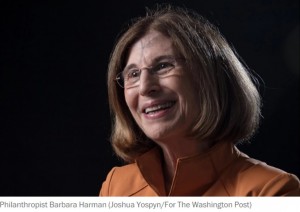
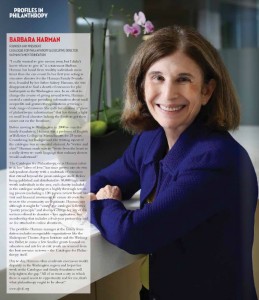
by Barbara Harman

By CFP President, Barbara Harman:

As some of you may know, I am a Bostonian who shares her time between two homes — one in Massachusetts and one in DC. Like many people here, I am still reeling from Monday’s events, and experiencing for the first time what it’s like to see devastation on the streets of my own city, a city I love. There is something quite unreal about it: familiar stores and restaurants, places I have walked with family and friends, the site of the finish line at the Marathon’s end — all of these familiar sites are now a crime scene. I will never forget the sound, the images of smoke billowing in the air, the runner who faltered near the end of the race blown back by the force of the first explosion, and the stories and pictures that chronicle the terrible loss of life and devastating injuries of those who survived but whose lives will never be the same.

There truly is a sense of coming together, of strength in community here, and one if its expressions is the creation of a fund to help the families devastated by loss. As one man so poignantly put it (he survived with lacerations to his face while his friends, standing on the other side of an adjacent mailbox, have all lost limbs) — the cost will be enormous, not just the medical and psychological costs, though these will be significant, but the cost in lost wages and even lost careers for goodness knows how long: maybe, for some, forever. Here at the Catalogue we rarely invite contributions to causes outside the DC region, but for those who are feeling, as many have said, that right now we are all Bostonians, please consider a contribution to onefundboston.org whose purpose is to help the individuals and families whose lives have been irrevocably altered by this senseless act of cruelty and violence.

16 Apr 13

DC One City Fund Makes Its Entrance

by Marie LeBlanc

Yesterday, DC Mayor Vincent Gray held a briefing at the Wilson Building about the One City Fund, a new initiative led by the DC Mayor’s Office, in partnership with many key nonprofit sector actors in the Washington area. The One City Fund is a new nonprofit funding mechanism in the FY2014 budget, and the briefing introduced the fund to the general public and nonprofit community. The current proposal makes available $15 million for nonprofits serving DC residents, through a competitive application process facilitated by the Community Foundation of the National Capital Region. The Fund will stand independent from government funding through other city departments, and aims to eliminate and replace earmarked nonprofit funding. (An important caveat: all information on the Fund is still preliminary, as the DC City Council has yet to approve it.)

Funding priorities for the One City Fund align with key goals of the DC One City Action Plan: growing and diversifying the DC economy; educating and preparing residents for the emerging new economy; improving the quality of life for DC residents; and increasing the city’s sustainability. Aside from these goals, priority funding areas for the Fund will include education, job training, homelessness, health, services for seniors, arts, public safety, and the environment. Obviously, most nonprofits in the District will meet those criteria in the broad sense, so keep this in mind too — Mayor Gray emphasized throughout the briefing that the application and selection process will prioritize innovation and new investments that will eventually become self-sustaining. Each grant cannot exceed $100,000 per year, though some projects may be renewed for up to three years.

What nonprofits need to know: The application requirements are still very preliminary, so expect more details over the summer (assuming that all goes to plan). The main take-away for potential applicants at this point is that the DC Government is looking for new nonprofit partners for government funding, and wants to help spark the innovation that will start to move the needle on key issue areas in the city. One other requirement – all funding must serve DC residents. Nonprofits operating in Maryland and/or Virginia as well as Washington must show through their proposals how any One City Fund monies will exclusively serve DC residents.

A comforting note for the smaller nonprofits in the Catalogue community: many questions were asked pertaining to the unique characteristics of small nonprofits during the briefing. The answers given by Mayor Gray and CFNCR President Terri Lee Freeman indicate that the application process will be flexible enough to accommodate smaller nonprofits (like those in the Catalogue), who do great work, have the potential to innovate, and can make a deep impact on their communities in DC.

For the community at large, the potential benefits of the One City Fund are substantial. The Mayor reiterated that an open, transparent, and competitive grant-making process is a step in the right direction for DC Government, and will allow more nonprofits to be part of that process. While, again, the Fund itself is in the planning stages, both Mayor Gray and Freeman spoke of several potential methods for using the grants to increase community knowledge and awareness of best practices in nonprofit work. This could include presentations by grantees on their work throughout the grant process; other collaboration/networking opportunities for grantees within the priority areas; and evaluations of the fund itself and its progress on moving the needle for areas like unemployment, workforce development, graduation rates, and environmental protection.

Next steps for those interested in One City Fund grants: On Thursday April 18th, the Committee of the Whole will hold a hearing on the One City Fund at the Wilson Building. Members of the nonprofit committee are encouraged to sign up to testify on behalf of the fund. More information will likely be made available by the Mayor’s Office and the Community Foundation after the One City Fund receives the green-light from the City Council – keep an eye on their websites over the summer for details on how and when to apply.

03 Apr 13

April: Sexual Abuse Awareness Month

by Marie LeBlanc

April marks the beginning of Sexual Assault Awareness Month (SAAM). It seems as though the news has been rife with stories about high profile rape and sexual assault cases in the recently, both at home and abroad (India, Brazil, Steubenville, US military) and with the HRC report in January shining a light on DC’s own mishandling of sexual assault cases, awareness about this cause could not come at a better time. Several CFP nonprofits are working actively to promote awareness of sexual assault and abuse this month, through workshops, events, advocacy and awareness campaigns.

DASH will celebrate its 2013 Allies in Change Luncheon at the end of April, recognizing community partners who have made a difference in the lives of women and children facing homelessness due to domestic violence.

Men Can Stop Rape works to mobilize men to use their strength for creating cultures free from violence, especially men’s violence against women. This month, they are offering discounts on trainings and materials to promote knowledge about men’s role in stopping rape and sexual assault.

DC Coalition Against Domestic Violence (DCCADV) celebrated a SAAM Day of Action on Tuesday, April 2nd, mobilizing on social media and reaching out to the Justice Department and DC Mayor Vincent Gray to advocate for freedom from sexual violence.

Break the Cycle provides comprehensive dating abuse prevention programs exclusively to young people. Before SAAM started, Break the Cycle was part of the movement to pass the Violence Against Women Act (VAWA), which was signed into law by President Obama on March 7th.

Safe Shores will also celebrate National Child Abuse Prevention Month this month, and welcomes community members to several special events that teach about the complexities of child abuse (sexual, emotional/mental, and physical).

Check out the CFP website for more information on small, local nonprofits working to protect women and girls, and follow the latest trends and events on SAAM on social media here.

27 Mar 13

In the News: State of the Nonprofit Sector

by Marie LeBlanc

This week, the Nonprofit Finance Fund released its 2013 “State of the Sector Survey”, indicating that across the country “39% [of nonprofits] will change the main ways they raise and spend money” in the coming year. According to NFF CEO Anthony Bugg-Levine:

“Nonprofits are changing the way they do business because they have to: government funding is not returning to pre-recession levels, philanthropic dollars are limited, and demand for critical services has climbed dramatically. At the same time, 56 percent of nonprofits plan to increase the number of people served. That goal requires systemic change and innovation – both within the sector, and more broadly as a society that values justice, progress and economic opportunity.”

An NFF press release includes the following top-line findings from the survey:

Nonprofits need new funding sources and models.

  • 42% of survey respondents report that they do not have the right mix of financial resources to thrive and be effective in the next 3 years.
  • 1 in 4 nonprofits has 30 days or less cash-on-hand.
  • Over the next twelve months, 39% plan to change the main ways they raise and spend money.
  • 23% will seek funding other than grants or contracts, such as loans or investments.

Nonprofits that receive government funding face particular challenges:

  • Only 14% of nonprofits receiving state and local funding are paid for the full cost of services; just 17% of federal fund recipients receive full reimbursement. Partial reimbursements require additional funding to cover the growing gap as nonprofits serve more people.
  • Government is late to pay: Among those with state or local funding, just over 60% reported overdue government payments; over 50% reported late payments from the federal government.

Under these challenging conditions, many nonprofits are unable to meet growing need in their communities:

  • For the first time in the five years of the survey, more than half (52%) of respondents were unable to meet demand over the last year; 54% say they won’t be able to meet demand this year.
  • This represents a worrying trend; in 2009, 44% of nonprofits said they were unable to meet demand.
  • Jobs (59%) and housing (51%) continue to be top concerns for those in low-income communities.
  • 90% of respondents say financial conditions are as hard or harder than last year for their clients; this is actually a slight improvement from prior years’ outlook

Nonprofits are changing the way they do business to adapt to the new reality. In the past 12 months:

  • 49% have added or expanded programs or services; 17 percent reduced or eliminated programs or services.
  • 39% have collaborated with another organization to improve or increase services.
  • 39% have upgraded technology to improve organizational efficiency.
  • 36% engaged more closely with their board.

Within the Greater Washington region, the picture looks similar. Looking at a subsection of CFP-profile nonprofits operating in Maryland, Virginia, and D.C., an overwhelming majority (86%) project their service demand will slightly or significantly increase in 2013, while 58% responded that they will not be able to meet that demand. This continues a trend of demand for services exceeding the supply seen in since at least 2008. Another concerning statistic — over 40% of surveyed nonprofits in the region indicated that they do not have the right mix of financial resources to “thrive and be effective” over the next three years.

The NFF discusses the result of this data – that nonprofits are forced to “innovate to increase efficiency, access new kinds of funding, evaluate impact, and work collectively to tackle social problems.” The question we, supporters of the nonprofit community, must ask ourselves is whether we’re creating an environment that fosters such innovation.

In a TED Talk earlier this month, Dan Pallotta challenged listeners to let nonprofits take risks and possibly fail, but have the (financial) freedom to truly innovate and search for new solutions to society’s intractable social problems. Such work takes a commitment on the part of the funding community to support innovative nonprofit leaders — and is the only way that the nonprofit and philanthropic communities will not only weather the current economic uncertainties, but thrive and create sustainable, positive change in coming years.