Written by Christy Zeitz, CEO of Fellowship Square
The need for affordable housing and services for older adults has exploded nationally – and locally. With housing, rental and health care costs soaring, older adults are now at greater risk of homelessness than at any time in recent history. Only one in three low-income seniors receive the housing assistance they are eligible for because the programs are small compared to real need.
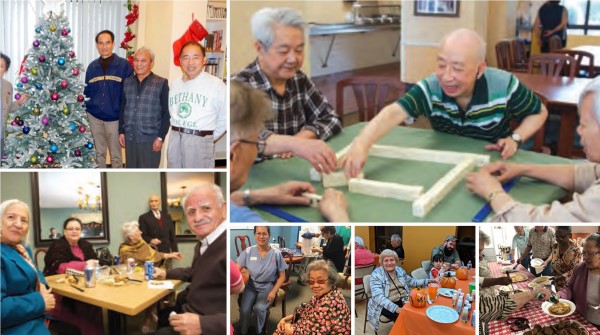
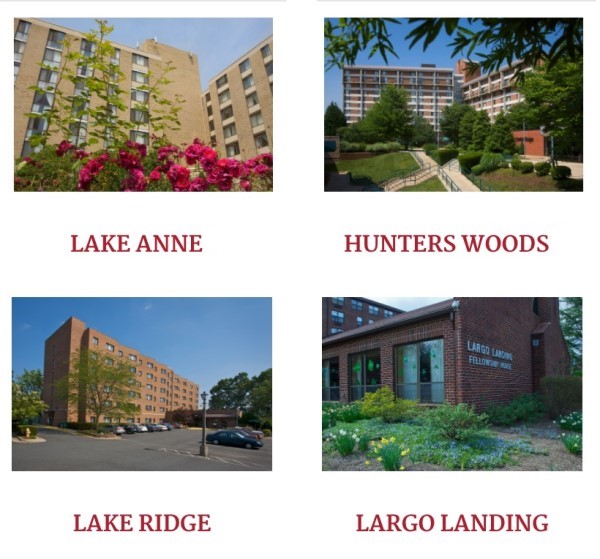
Fellowship Square works tirelessly to help. This Fall, Fellowship Square celebrates our 60th anniversary, marking six decades of providing safe, affordable, well-managed and attractive apartment living for some 800+ older adults (age 62+) who meet low-income criteria set by the U.S. Department of Housing and Urban Development (HUD). Through our four communities in the Washington DC metro region, Fellowship Square offers not only accessible and affordable housing for seniors, but also vital services and programs that help our residents lead healthy and active lifestyles.
Our Beginning
Fellowship Square’s founding in 1960 was led by Rev. Dr. John A. Scherzer (1901-1994), a pastor and member of the Lutheran Lay Fellowship of Metropolitan Washington who aspired to bring together his local community to better support vulnerable seniors and assure they had access to safe and affordable housing. Under his stewardship, a corporate charter for Fellowship Square was issued by the D.C. government on November 30, 1960. In those early years, Fellowship Square assisted a diverse population of older adults and sought funding and land to build an affordable housing community in the region. In 1970, FSF broke ground on the Lake Anne Fellowship House in Reston, VA, and welcomed residents in 1971. The community soon expanded, with the Lake Anne II Fellowship House opening just five years later (1976). Over the next decade, Fellowship Square expanded its communities and geographic reach with Hunters Woods Fellowship House in Reston, VA (1979), Lake Ridge Fellowship House in Woodbridge, VA (1983), and Largo Landing Fellowship in Upper Marlboro, MD (1984).
Fellowship Square Today
Fellowship Square’s four communities in Northern Virginia and Maryland currently provide 670 affordable apartments in a safe and dignified environment for more than 830 older adults (aged 62+) living on extremely limited fixed incomes. Many of our residents live on Social Security or Supplemental Security Income alone, and the average annual income across our communities is approximately $12,000/year. Funding and subsidies from HUD and other organizations ensure that rent is never more than 30% of a resident’s income.
Fellowship Square proudly enables residents like Sharlene Fanning, 71, have a safe, stable, affordable and comfortable place to live and thrive:
“In my 60s, I was working three jobs in childcare and food service and still couldn’t afford to rent my own apartment in the area. So for some time, I was renting a single room in apartments and living with roommates. But even rent for a single room kept getting higher and higher to a point I couldn’t afford. I finally had to move in with my daughter and her family. We were 6 people in a three bedroom apartment and I was living in a room with my granddaughters. I wanted more independence and not to be a burden. On my 62nd birthday, I dropped off my application for Fellowship Square’s Lake Ridge Fellowship House. With the housing benefits I receive, I can live on my own and be active in the community here. I don’t know how other people do it. There are so many other baby boomers out there who I’m worried about if there are not more housing programs for seniors. I’m worried that many could end up moving from room to room as I did, or homeless and on the street.”
Fellowship Square Amid COVID-19
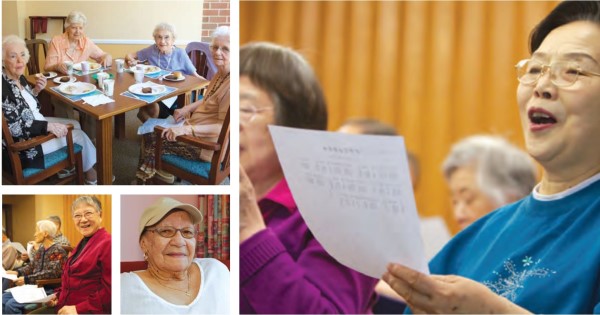
With the help of our committed staff, volunteers, and community groups, we also aim to meet the physical, social, and emotional needs of our residents with dozens of opportunities each month for residents to be active, engaged, and reminded that they are a valued part of our community. These have included cooking classes, choirs, visits from therapy dogs, cards playing, painting, and art.
While most activities are on hiatus right now due to COVID-19 and social distancing, Fellowship Square and our staff and volunteers are ensuring that no one suffers from isolation. With safety as a top priority, we have closed common areas and restricted non-essential visitors — while at the same time holding “check in & chat” calls, encouraging residents to take on hobbies such as puzzles and art, as well as get their bodies moving with outside walks. I’m pleased to report that our communal gardens have never looked more beautiful, as a handful of residents are managing pandemic stress through gardening!
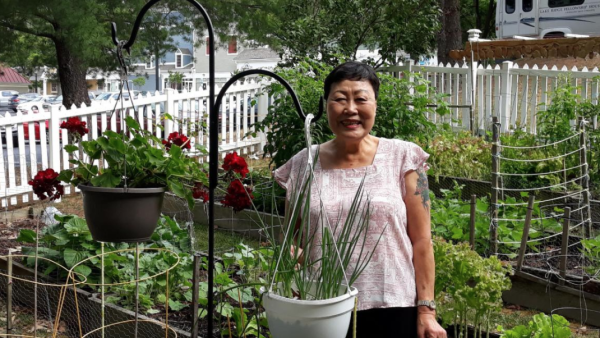
Gardening at Lake Ridge Fellowship House
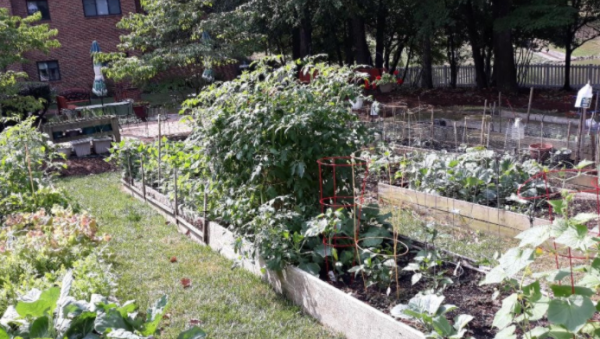
Gardens at Lake Ridge Fellowship House
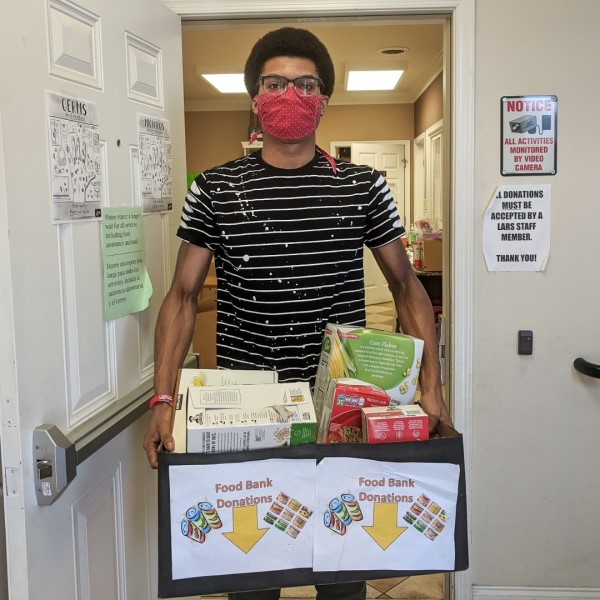
We’ve also received unbelievable support from our local community during this time. Although many of our residents have been avoiding crowded grocery stores, they are still eating well thanks to the donation and delivery of food, milk, prepared meals and care packages from groups including McLean Bible Church, Lake Ridge Baptist Church, the Woodbridge Rotary, Greater Mt. Nebo African Methodist Episcopal Church, St. Anne Episcopal Church Food Pantry and many more. Our residents need and appreciate these efforts! Learn about opportunities to help with food donations and contactless food delivery, or volunteer to call residents to check in on their well-being. We especially need volunteers who speak Korean, Chinese, Farsi and Russian.
Addressing the Unique Senior Housing Demands of the DC Region
The demand for affordable senior housing is particularly high in the greater Washington DC region, where an annual income of nearly $60,000 is needed to afford a 1-bedroom apartment. In the past, seniors of limited means used to be able to stay in their homes or downsize into rental apartments. Today in our region, however, older renters are getting squeezed out as rents and real-estate prices have exploded and affordably priced options disappear.
Take for example the experience that 89 year old Fellowship Square resident Nancy Delay shared:
“My husband and I were in our 60s and had to move apartments every few years to stay in one we could afford. When the rents would raise at the end of our initial rental agreement, we so often could no longer afford it and would have to start all over to find something in our price range again. We lived in many places in Maryland and Virginia as my husband neared his retirement from the postal service, and as rents kept rising it was getting harder and harder to find an apartment where we could stay for the long term. My daughter found Fellowship Square for us and we were able to move in. Today, it can take years to get in. I feel for the seniors in our area who are on long waitlists for housing help and whose lives are in distress. They don’t have the money for the rent they are paying now and can end up homeless and, worse, sleeping on the street or in a shelter. I want our government and community to do what it can to build more affordable housing and subsidized housing for seniors. I’m now 89 and I’ve been safe and secure and living healthily in a stable home because I’ve had the benefits of subsidized housing. I want that for others.”
Fellowship Square kicked off its 60th year with two groundbreakings to meet the increasing affordable housing needs of older adults well into the future:
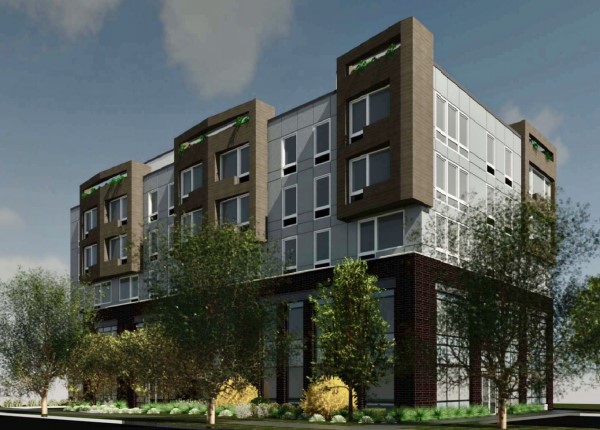
- Redevelopment of its Lake Anne Fellowship House, an $86+ million project that includes the construction of a new 240-apartment building to replace the existing property.
- A $12+ million renovation to the Hunters Woods Fellowship House to modernize its 225-units that provide affordable housing to 300+ residents by enhancing amenities and common space.
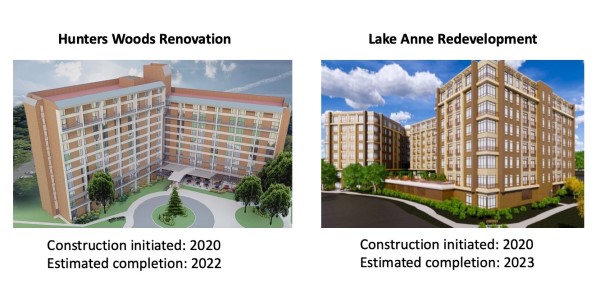
These communities will help local seniors like Sharlene Fanning, 71:
“In my 60s, I was working three jobs in childcare and food service and still couldn’t afford to rent my own apartment in the area. So for some time, I was renting a single room in apartments and living with roommates. But even rent for a single room kept getting higher and higher to a point I couldn’t afford. I finally had to move in with my daughter and her family. We were 6 people in a three bedroom apartment and I was living in a room with my granddaughters. I wanted more independence and not to be a burden. On my 62nd birthday, I dropped off my application for Fellowship Square’s Lake Ridge Fellowship House. With the housing benefits I receive, I can live on my own and be active in the community here. I don’t know how other people do it. There are so many other baby boomers out there who I’m worried about if there are not more housing programs for seniors. I’m worried that many could end up moving from room to room as I did, or homeless and on the street.”
Celebrating Our Yesterdays, Todays and Tomorrows
Fellowship Square has provided homes for thousands of low-income seniors since our founding in 1960 and has been on the front lines of the affordable housing challenge ever since. We at Fellowship Square appreciate that aging is something to be appreciated and celebrated. We embark on this highly unusual 60th anniversary year amid the global COVID-19 pandemic prepared to protect and serve our residents. Our in-person celebrations may be postponed, but through the pandemic and beyond we continue to engage our excellent staff, energetic volunteers, committed supporters and community stakeholders to work together to meet the affordable housing needs of today and the future.
There are many ways to get involved in the mission of the Fellowship Square and support seniors with very limited incomes and resources. Join us as a volunteer, have your business or nonprofit become a community partner, consider board membership, attend or sponsor an event, or pursue an internship or career position.